 Lab Creator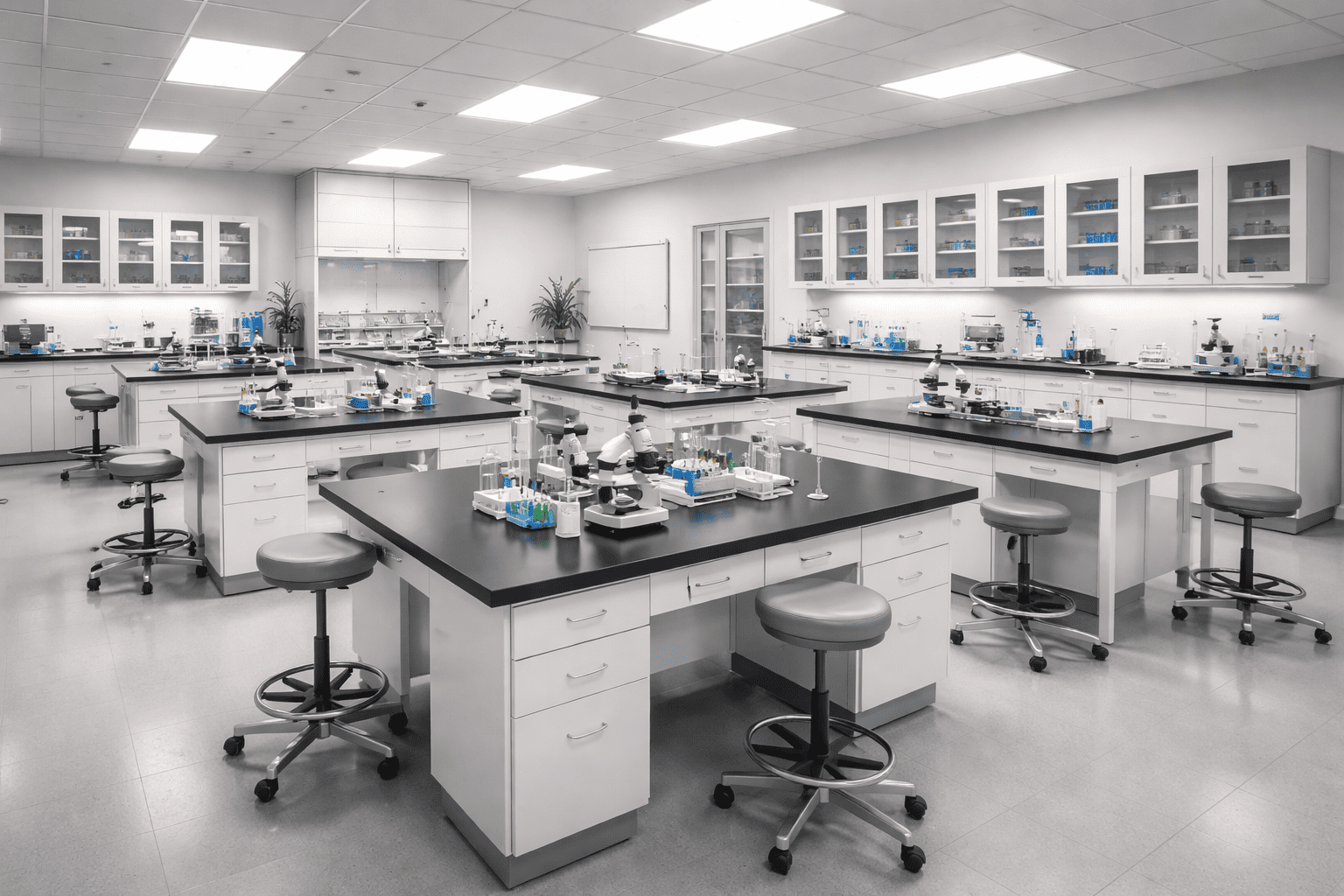
Designing an efficient, safe, and comfortable laboratory is about much more than just equipment. The furniture you choose—especially Lab Stools, Lab Tables, and Lab Storage Cabinets—directly affects ergonomics, workflow, safety, and even how long your lab assets last. Investing time in choosing the right pieces will pay off for years in productivity and reduced maintenance.
Below is a practical guide to help you evaluate and select the right Lab Stools, Lab Tables, and Lab Storage Cabinets for your space.
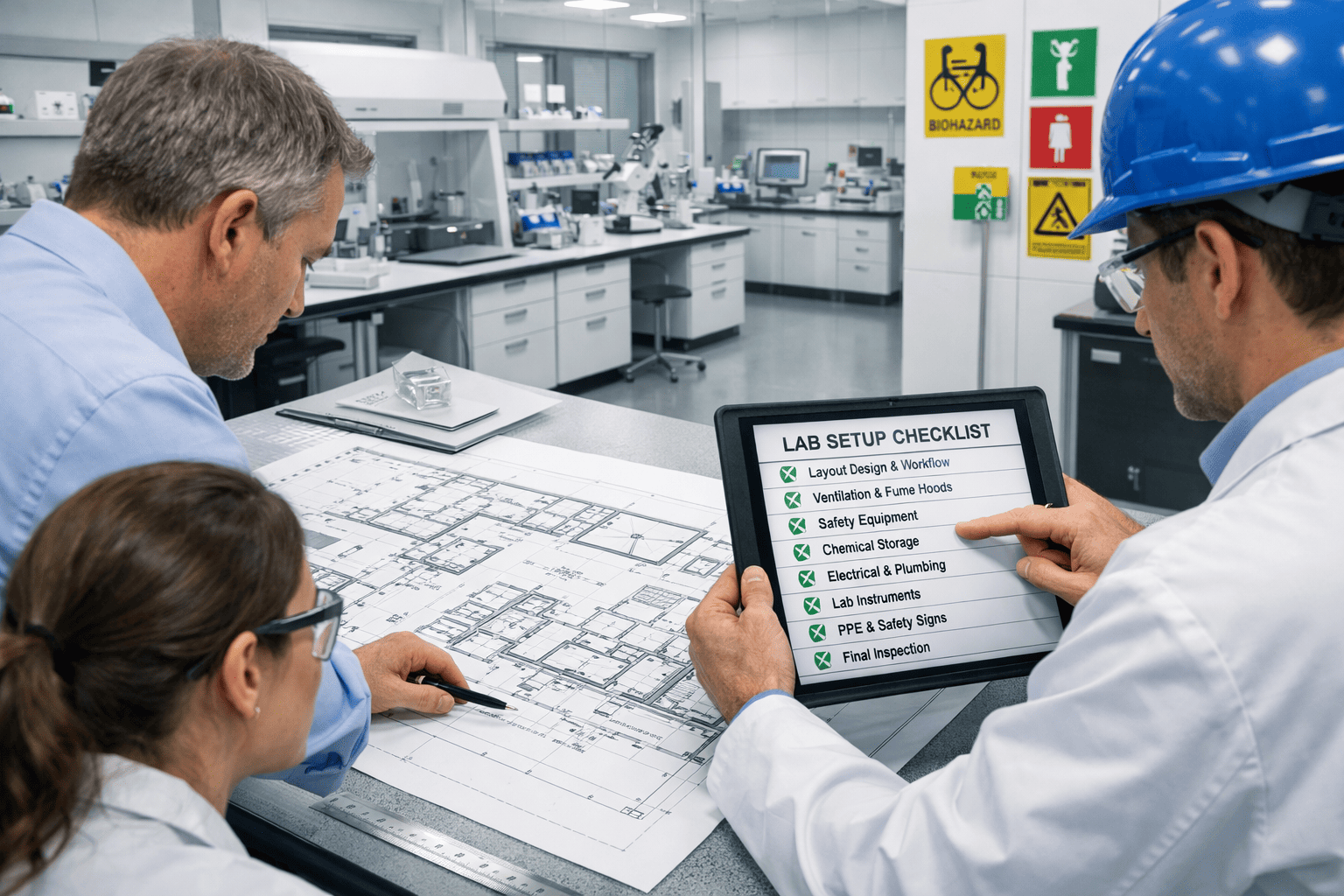
Start with Your Lab’s Requirements
Before looking at catalogues or vendor quotes, clarify:
- What type of work is done (wet chemistry, biology, electronics, microscopy, computer-based, teaching, etc.)
- How many users at peak times
- Whether users sit, stand, or switch between both
- Types of chemicals and materials used
- Safety and compliance requirements (board, university, industry standards)
- Space constraints and future expansion plans
Use these points as a checklist when you compare options for Lab Stools, Lab Tables, and Lab Storage Cabinets.
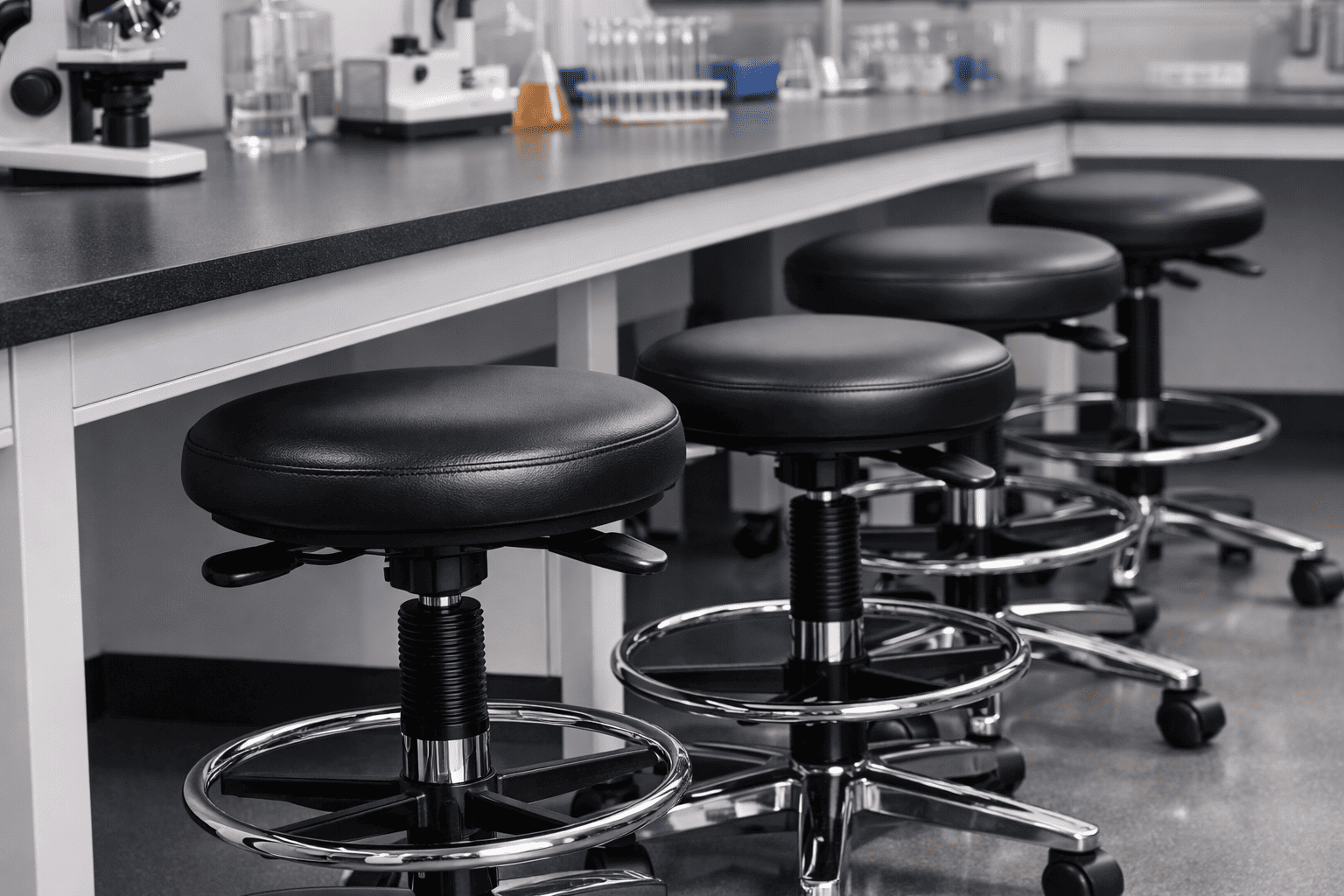
How to Choose the Right Lab Stools
Lab Stools are critical for user comfort and long-term health. Poor seating can lead to fatigue, back pain, and reduced productivity.
1- Ergonomics & Adjustability
Look for Lab Stools that:
- Have height adjustment to suit different user heights and table heights
- Offer a comfortable seat with adequate padding and contour
- Include a backrest (for tasks requiring long sitting)
- Provide a foot ring for higher seating to support legs and reduce strain
If your lab has both sitting and standing tasks, consider Lab Stools with a greater range of height adjustment or “sit-stand” stools.
2- Materials & Cleanability
The upholstery and frame must handle regular cleaning and possibly exposure to chemicals.
- Seats: choose vinyl, PU, or other non-porous, easy-clean materials
- Avoid fabrics that absorb spills and are difficult to disinfect
- For harsh chemical environments, confirm chemical resistance with the vendor
For cleanrooms or sensitive environments, Lab Stools may need specific anti-microbial or low-particulate materials.
3- Mobility & Stability
Decide between:
- Stools with casters – better for mobility, especially in teaching labs or large labs
- Stools with glides – more stable; better where precise positioning is required
Ensure Lab Stools have a wide, stable base and appropriate weight capacity, especially in labs where users may lean or reach frequently.
4- Special Requirements
Depending on your lab type:
- ESD / anti-static Lab Stools for electronics or instrumentation labs
- Height-limited stools if you must fit under fixed benches
- Color coding by lab or zone for visual management and safety
How to Choose the Right Lab Tables
Lab Tables are the primary work surfaces of the lab. The right choice protects users, instruments, and the building itself.
1- Height & Configuration
Common Lab Tables options include:
- Sitting-height benches (typically around 750 mm)
- Standing-height benches (around 900 mm)
- Height-adjustable tables for flexibility and ergonomic comfort
Consider:
- Whether you need perimeter benches, central (island) benches, or both
- Clearances for movement and safety (e.g., space for emergency evacuation)
- Whether Lab Tables should be fixed or mobile (on lockable casters)
2- Worktop Materials
The worktop is where performance and durability really matter. Popular options for Lab Tables include:
- High-pressure laminate – economical, suitable for light-duty or dry labs
- Epoxy resin – excellent chemical, heat, and moisture resistance; ideal for wet chemistry
- Phenolic resin – good chemical resistance, lighter than epoxy, resistant to moisture
- Stainless steel – great for sterile, food, or biological environments; easy to clean
- Solid wood with finish – mainly for physics or analytical labs where chemicals are minimal
Match the top material of your Lab Tables to the worst-case chemicals, heat, and mechanical loads in your lab.
3- Frame Strength & Load Capacity
Check:
- Frame material (steel is standard; powder-coated for corrosion protection)
- Load capacity per table or per linear meter
- Cross-bracing or design to prevent wobble and vibration
For labs with heavy instruments (centrifuges, incubators, spectrometers), specify Lab Tables with reinforced frames and vibration-resistant design.
4- Integrated Services & Accessories
Think ahead about services that could be integrated into Lab Tables:
- Sinks, taps, and gas points
- Electrical raceways, sockets, and data ports
- Reagent shelves or service ducts above the bench
- Under-bench Lab Storage Cabinets where appropriate
Integrated design ensures a neater, safer lab and reduces later retrofitting costs.
How to Choose the Right Lab Storage Cabinets
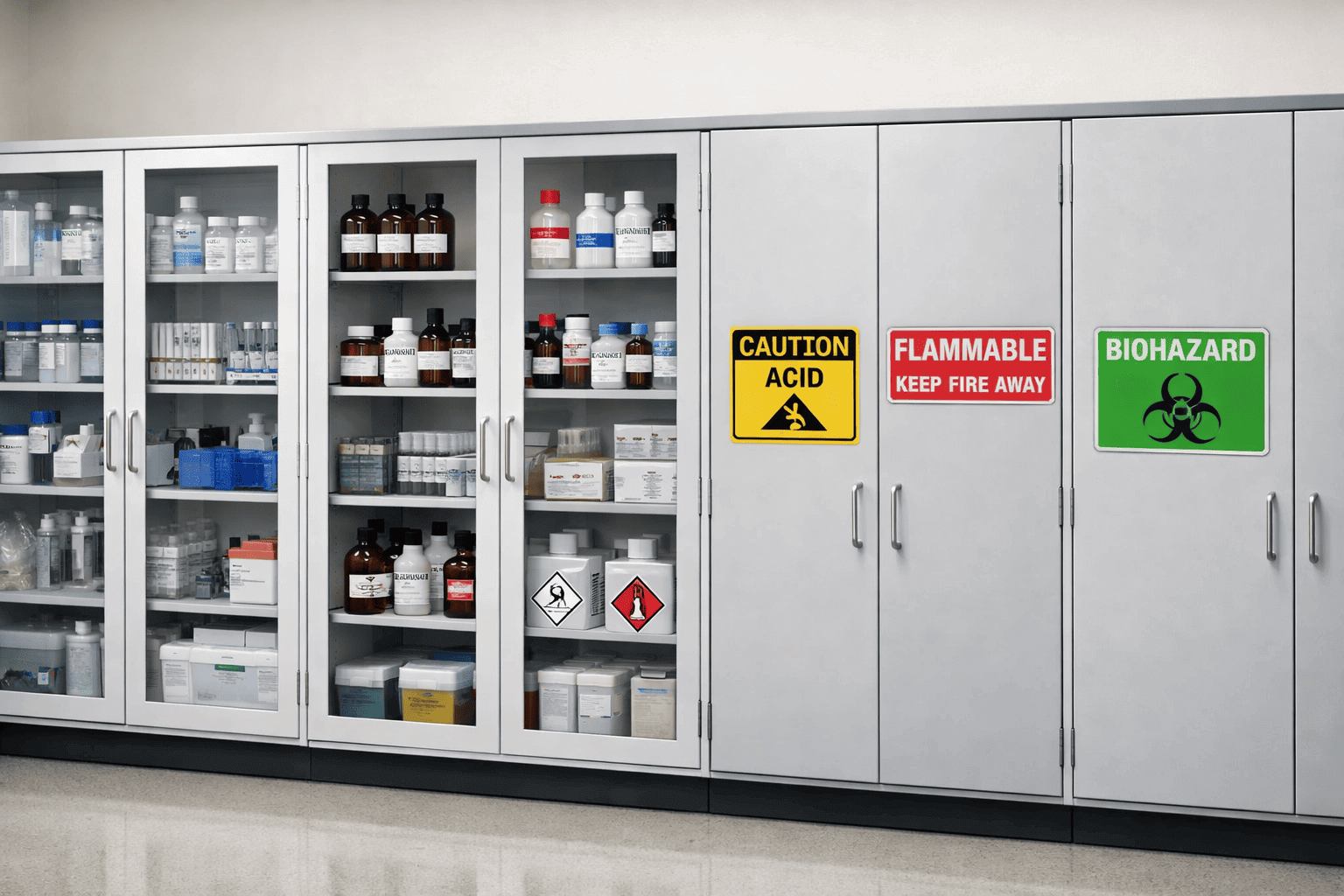
Proper storage is not just about neatness—it’s about safety, compliance, and protecting valuable materials. Lab Storage Cabinets need to match what you store and how often you access it.
1- What Are You Storing?
Classify your storage needs before selecting Lab Storage Cabinets:
- General glassware and consumables
- Reagents and chemicals (acids, bases, solvents, flammables, toxics)
- Biological samples or media
- Instruments, tools, and spare parts
Different materials may require dedicated Lab Storage Cabinets with special lining, ventilation, or fire resistance.
2- Materials & Construction
Key points for Lab Storage Cabinets:
- Body and shelves: often steel with powder coating for corrosion resistance
- For corrosive chemicals: internal lining or special coatings; non-metallic shelving may be needed
- For flammable liquids: certified fire-resistant Lab Storage Cabinets with self-closing doors and proper labeling
Check for adjustable shelving so you can reconfigure storage as your inventory changes.
3- Ventilation & Safety Features
Some Lab Storage Cabinets may require:
- Venting to an exhaust system if vapors are hazardous
- Spill containment trays or sumps at the base
- Lockable doors for controlled substances or high-value items
- Clearly visible safety labels and color coding (flammable, corrosive, toxic, etc.)
Ensure your choices align with local regulations and institutional guidelines.
4- Location & Accessibility
Plan where Lab Storage Cabinets will be placed:
- Frequently used items should be near work areas but not obstructing movement
- Heavy or large items should be stored at waist height to reduce strain
- Wall-mounted cabinets for light items to free floor space
- Under-bench Lab Storage Cabinets for efficient use of lower space
Balance maximum storage with clear, safe circulation paths.
Integrating Stools, Tables, and Cabinets into a Coherent Layout
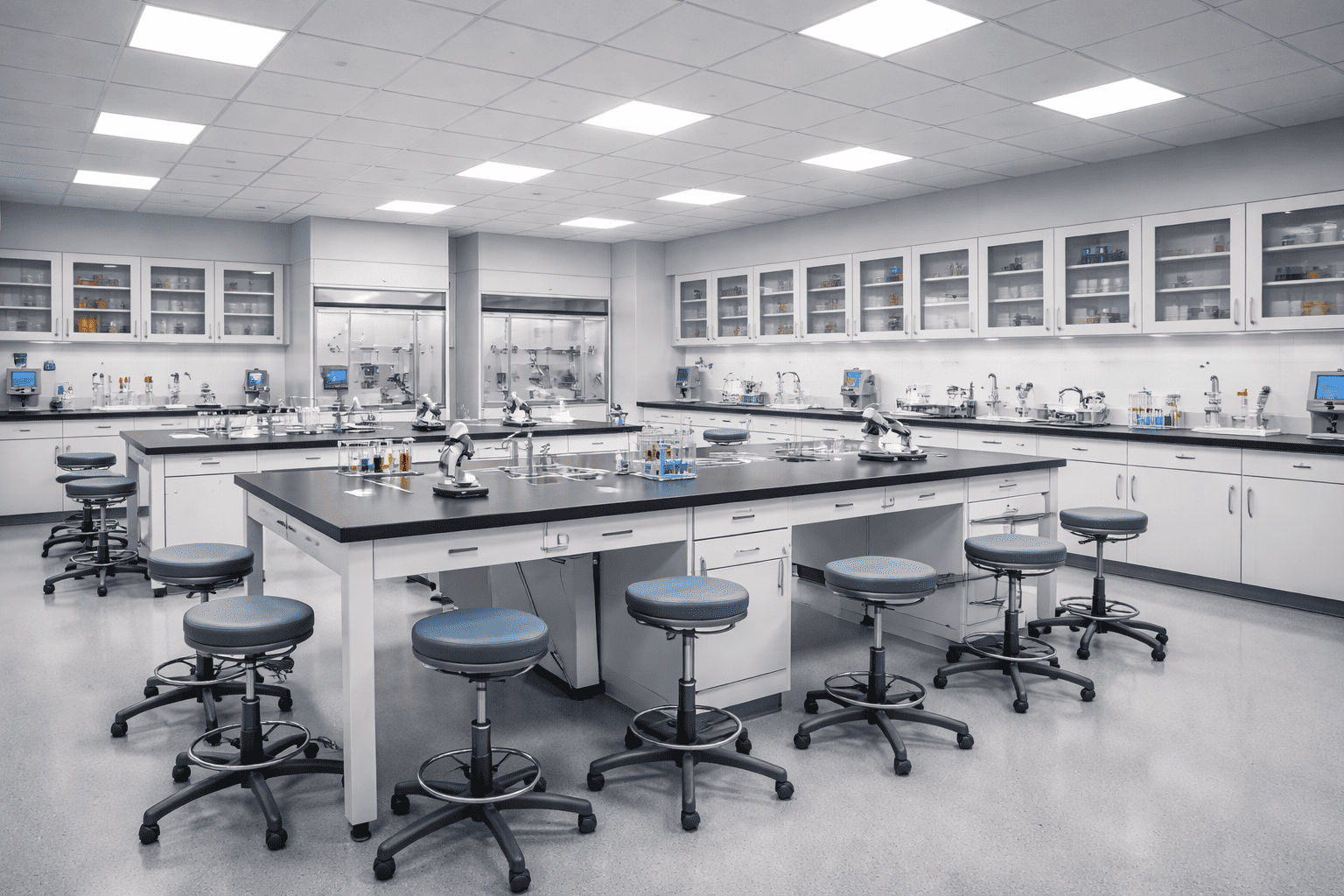
Even the best Lab Stools, Lab Tables, and Lab Storage Cabinets fail if they don’t work well together in the space.
Consider:
- Workflow: move from storage → prep → experiment → waste disposal in a logical sequence
- Safety: keep aisles clear, emergency exits unblocked, and safety equipment accessible
- Flexibility: modular Lab Tables and movable Lab Stools help adapt to new experiments or equipment
- Future growth: allow space for additional Lab Storage Cabinets or extra benches later
Create simple layout sketches or work with a lab planner to test different arrangements before buying.
Budget vs. Quality: Finding the Right Balance
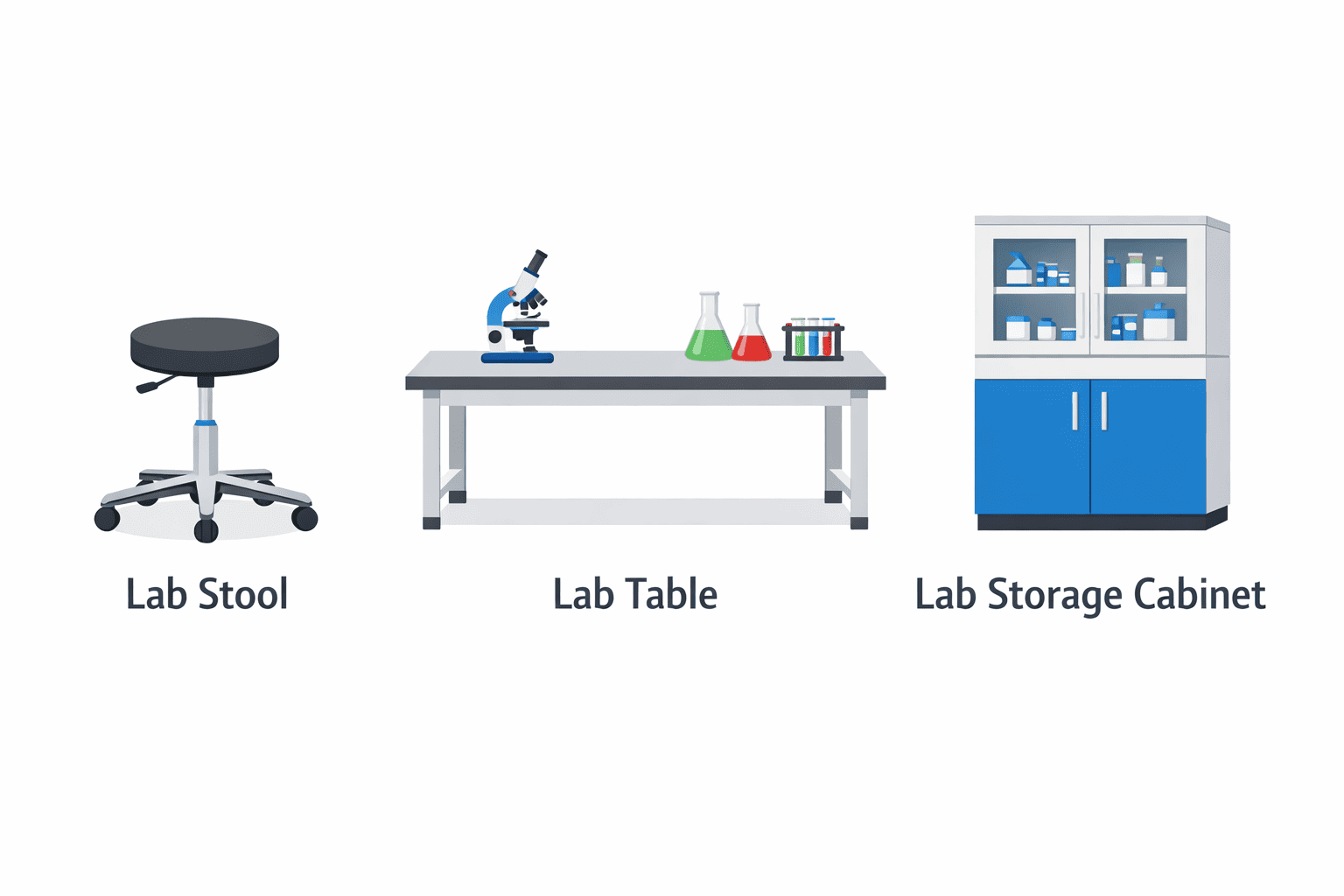
While it’s tempting to choose the lowest-cost options, cutting corners on Lab Stools, Lab Tables, and Lab Storage Cabinets often leads to:
- Higher maintenance and replacement costs
- User discomfort and reduced productivity
- Safety risks and non-compliance
Focus on total cost of ownership:
- Durability and warranty period
- Availability of spare parts and service
- Flexibility (adjustable, modular designs stretch your investment further)
Where budgets are tight, prioritize:
- Safe and durable Lab Tables with appropriate worktops
- Ergonomic Lab Stools for frequent users
- Compliant Lab Storage Cabinets for hazardous chemicals
Choosing the right Lab Stools, Lab Tables, and Lab Storage Cabinets is a strategic decision, not just a purchase. By focusing on ergonomics, material performance, safety, and future flexibility, you can create a lab environment that supports both current needs and future growth.