 Lab Creator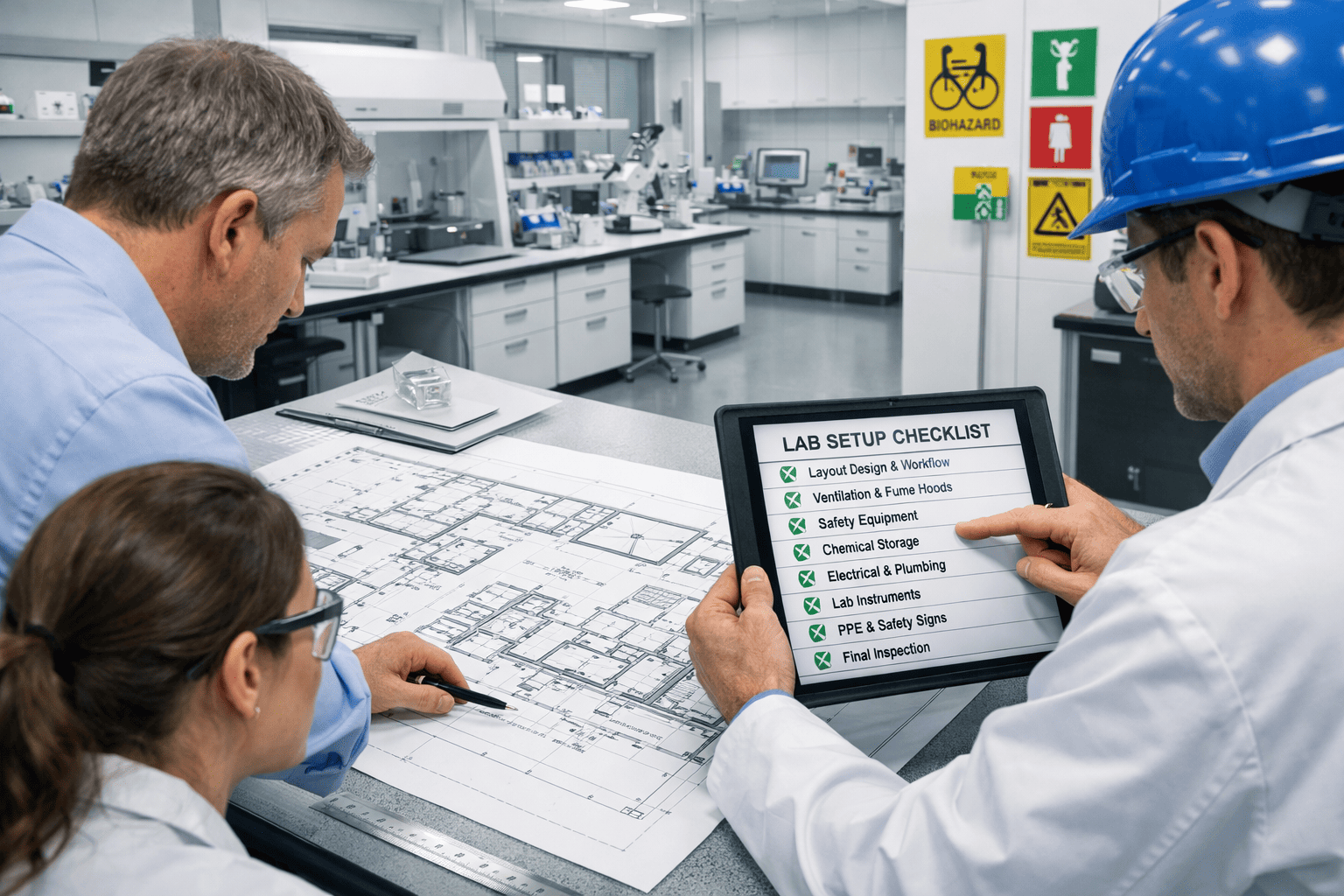
Setting up a laboratory is not just about buying equipment and filling a room with furniture. A successful Laboratory Setup starts much earlier—with planning, compliance, workflow design, and future scalability in mind. Miss one critical step, and you risk delays, budget overruns, or worse, non-compliance issues.
This Laboratory Setup Checklist walks you through everything you must consider before construction begins. Whether you’re planning a research lab, testing lab, pharma lab, or educational facility, this guide helps you build it right the first time.
1- Define the Purpose of the Laboratory
Before anything else, be crystal clear on what the lab will be used for.
Ask yourself:
- What type of testing or research will be conducted?
- Will it handle chemicals, biological samples, or physical testing?
- Is it a routine testing lab or an R&D facility?
- Will it need accreditation like NABL, ISO, or GMP?
Your answers directly impact the Laboratory Setup design, layout, equipment selection, and safety requirements. Designing a generic lab without a clear purpose often leads to costly redesigns later.
2- Regulatory & Compliance Requirements
Compliance is not optional. It should be planned before construction, not fixed afterward.
Key points to check:
- National and local building codes
- Fire safety norms
- Electrical safety standards
- NABL / ISO / WHO / GMP requirements (as applicable)
- Pollution control and waste disposal rules
A strong Laboratory Setup Checklist always includes regulatory approvals early in the process. Designing without these guidelines can result in rejected audits or forced modifications.
3- Space Planning and Layout Design
A well-planned layout improves efficiency, safety, and workflow.
Consider:
- Sample receiving and storage areas
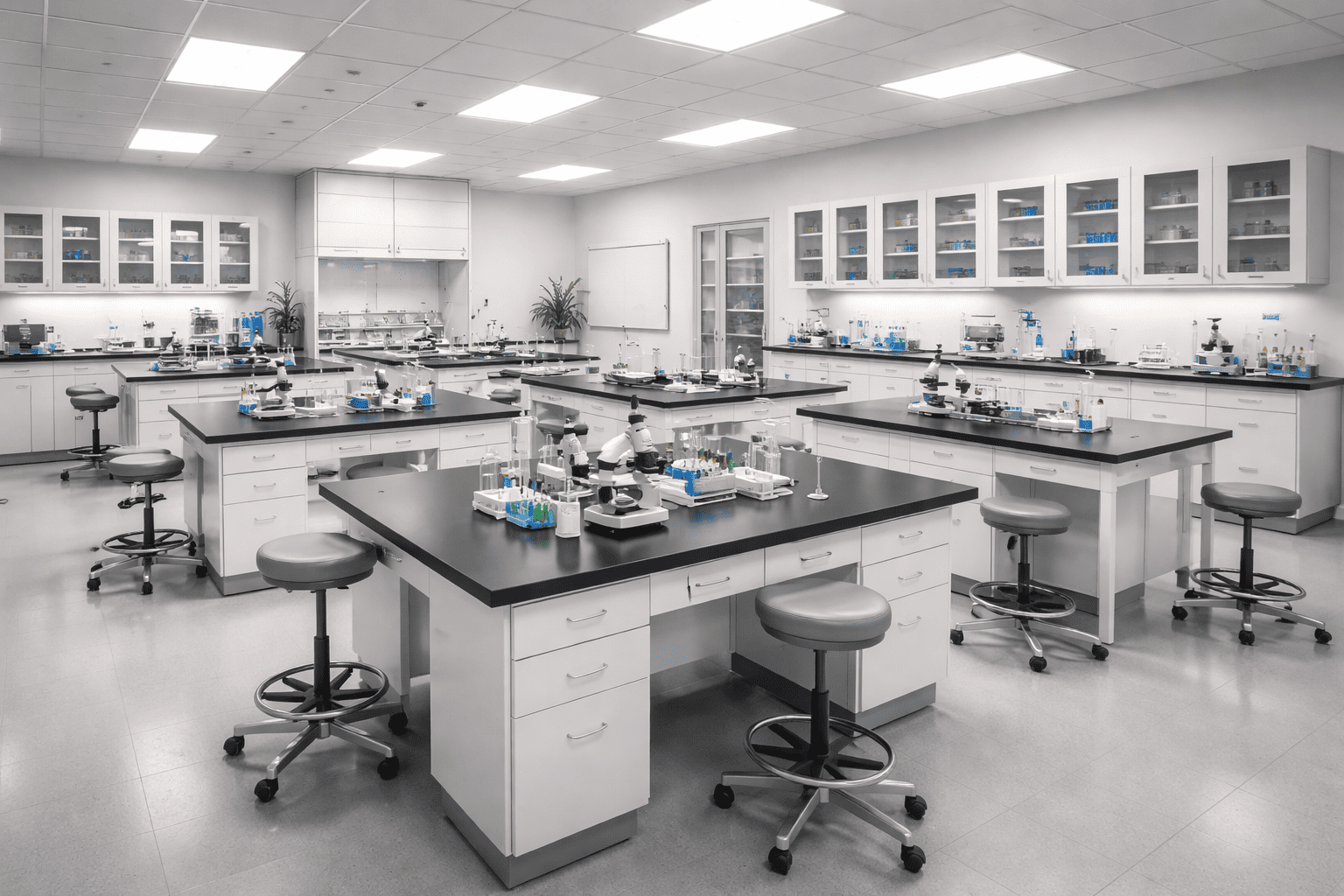
- Work zones and testing benches
- Instrument rooms
- Chemical storage
- Wash areas
- Waste disposal routes
- Staff movement and emergency exits
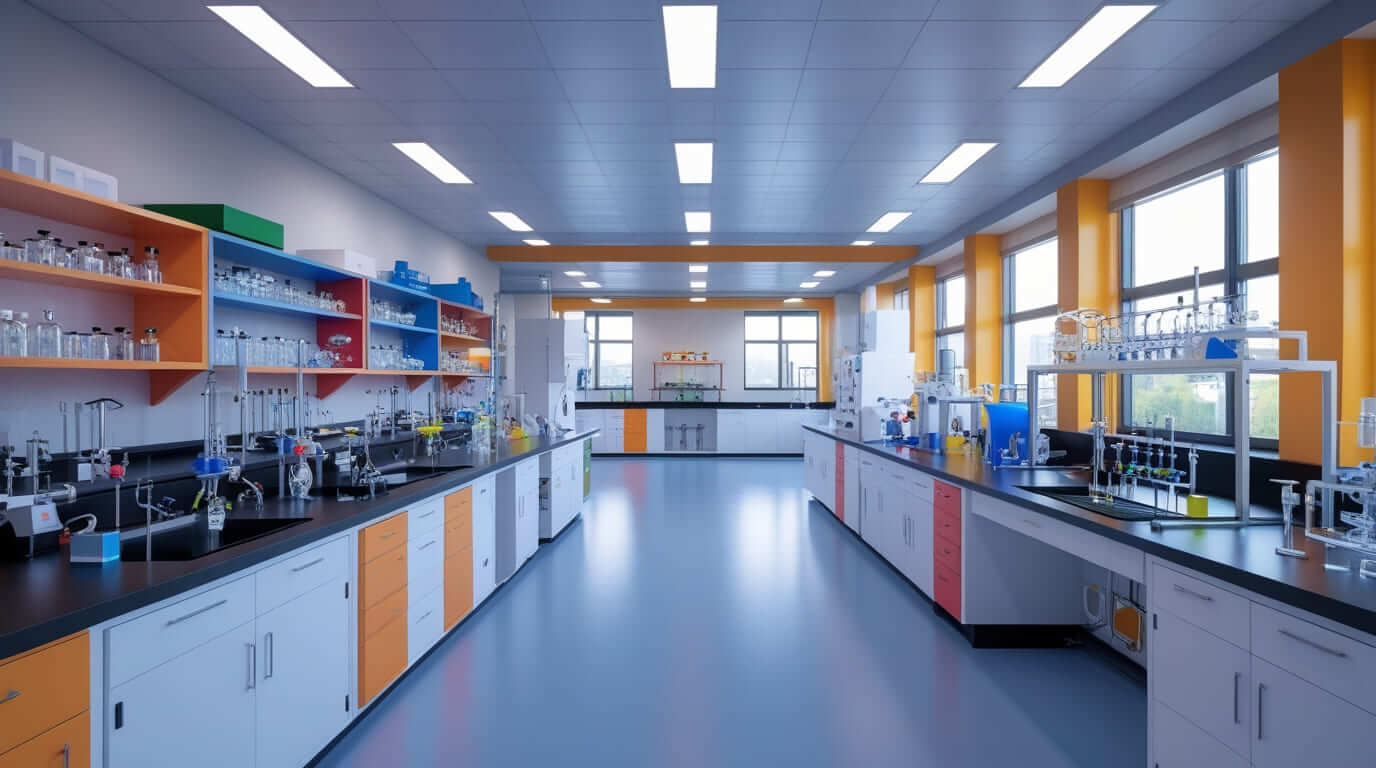
Good Laboratory Setup design minimizes cross-contamination and unnecessary movement. Always design for workflow, not just aesthetics.
4- Utility Planning (The Backbone of Any Lab)
Utilities are often underestimated—but they define how functional your lab will be.
Plan in advance for:
- Electrical load and backup power
- HVAC and air changes per hour
- Exhaust systems
- Gas pipelines
- Water supply (RO, DM, distilled)
- Drainage and effluent lines
Once construction is complete, modifying utilities becomes expensive and disruptive. That’s why utilities must be a core part of your Laboratory Setup Checklist.
5- Laboratory Furniture Selection
Furniture isn’t just furniture in a lab—it’s a safety component.
Key items include:
- Modular laboratory workbenches
- Chemical-resistant countertops
- Storage cabinets
- Sink units
- Wall-mounted shelves
Furniture selection should match your lab’s chemical exposure, load requirements, and workflow. Choosing the wrong materials can shorten equipment life and increase safety risks in your Laboratory Setup.
6- Safety Systems & Equipment
No Laboratory Setup Checklist is complete without safety planning.
Must-have safety elements:
- Chemical fume hoods
- Biosafety cabinets (if applicable)
- Emergency showers and eye wash stations
- Fire extinguishers and alarms
- Spill kits
- Safety signage
Safety systems should be integrated into the layout, not added later as an afterthought.
7- Equipment Planning (Before You Buy)
Never buy instruments first and then design the lab around them. That’s a common mistake.
Before purchasing equipment:
- Finalize equipment specifications
- Check power, space, and ventilation needs
- Confirm vibration and temperature sensitivity
- Plan maintenance access
A smart Laboratory Setup ensures that every instrument fits into the layout without compromising safety or workflow.
8- Storage & Material Handling
Poor storage leads to clutter, safety hazards, and compliance failures.
Plan dedicated storage for:
- Chemicals (segregated by compatibility)
- Samples
- Glassware
- Consumables
- Documentation
Efficient storage design is a silent but powerful part of a successful Laboratory Setup Checklist.
9- Waste Management & Disposal
Waste handling must be designed at the planning stage.
Include:
- Separate waste categories (chemical, biological, sharps)
- Neutralization systems if required
- Effluent treatment provisions
- Safe temporary storage areas
Regulators pay close attention to waste systems, so this step is critical for long-term operation.
10- Future Expansion & Scalability
A lab built only for today’s needs becomes outdated quickly.
Think ahead:
- Can you add more workstations?
- Is there space for new instruments?
- Can utilities handle future load increases?
A future-ready Laboratory Setup saves money and downtime later.
11- Documentation & Project Coordination
Finally, ensure everything is properly documented.
This includes:
- Layout drawings
- Utility schematics
- Equipment lists
- Compliance documents
- Maintenance plans
Coordination between architects, lab planners, equipment suppliers, and compliance consultants is essential. Poor coordination is one of the biggest causes of delays in Laboratory Setup projects.
Final Thoughts
Building a laboratory is a high-investment, high-responsibility project. Cutting corners during planning almost always leads to higher costs later. A detailed Laboratory Setup Checklist helps you avoid mistakes, meet compliance standards, and create a lab that works efficiently from day one.
When done right, Laboratory Setup is not just about construction—it’s about creating a safe, scalable, and compliant environment that supports accurate results and long-term growth.